How Nepal's PM Sold Cheese in 24 Hours (And Why It Didn't Last)
In short
In May 2026, Prime Minister Balen Shah posted a photo with DDC's yak cheese, and demand jumped more than 30% the next day. The spike faded quickly because cheese is not an everyday staple in Nepal and DDC's yak cheese supply has structural limits. The lesson for brands: a viral moment only pays off if you are ready to capture interested buyers immediately and give them a reason to return.
One photo. One caption. Thirty percent more cheese sold the next day.
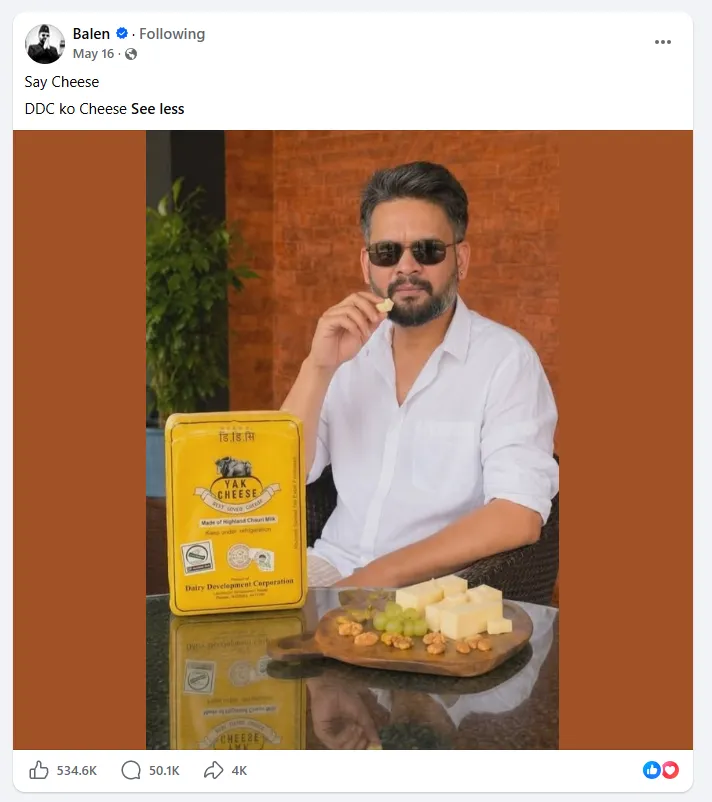
In May 2026, Nepal’s Prime Minister Balendra “Balen” Shah posted a simple photo on Facebook. He was holding a plate of cheese cubes, next to a packet of Yak Cheese from DDC, the state-owned dairy company. His caption: “Say Cheese, DDC ko Cheese.”
Within 24 hours, the post had over 460,000 likes. Tens of thousands of comments. Real people, real reactions, no ad budget behind any of it.
This is what actually happened, and what it teaches Nepal businesses about the real difference between attention and demand.
What Actually Happened
DDC’s own marketing chief confirmed it directly. Demand for yak cheese jumped by more than 30 percent the very next day.
Stores across the Kathmandu Valley reported real, visible interest. Some outlets ran low on stock. People who hadn’t thought about yak cheese in years were suddenly asking for it by name.
One DDC official said 50 to 100 people a day were specifically requesting yak cheese because of the post. That’s not a marketing team’s estimate. That’s a real, on-the-ground shift in customer behavior, in less than a day.
What This Kind of Reach Would Actually Cost
Think about this for a second, because it’s the part most people skip past.
A Facebook post reaching hundreds of thousands of people, with real engagement, in a single day — that’s not a small win. If DDC had tried to buy that same reach through Meta Ads, at typical Nepal CPM rates, they’d be looking at a serious ad budget to get anywhere close to that level of genuine attention.
This is the real value of a trusted, high-profile voice saying something real. It’s not something you can fully replicate with money. It’s earned, not bought — and that’s exactly why it worked as well as it did.
But Here’s the Real Story: A Spike, Not a Habit
Here’s where it gets more interesting than a simple good-news story.
Yak cheese in Nepal isn’t a daily habit. It’s an occasional food — something people have at a restaurant once in a while, not something in most households’ regular shopping list. One viral post doesn’t change that overnight, no matter how many likes it gets.
There’s also a deeper problem underneath the viral moment. DDC’s yak cheese supply chain has real, structural issues — herding in the high Himalayas is declining, milk supply is shrinking, and some mountain production facilities have been shutting down. A one-day demand spike doesn’t fix any of that. It’s a burst of attention sitting on top of a business that has bigger, slower problems to solve.
This matters for how we should actually judge this moment. It wasn’t a failure — the spike was real and confirmed. But a single post, however powerful, was never going to fix a structural supply problem or permanently change how often Nepalis eat cheese.
A quick honest note: some public claims about this event — like specific supermarket chains running completely out of stock, or DDC being able to pay off loans because of it — circulated widely online. I couldn’t confirm those specific details through reliable news sources, so I’m leaving them out rather than repeating them as fact. What’s confirmed and solid is the 30 percent demand jump, the real viral numbers, and DDC’s own statements about increased customer interest.
Why Cheese Specifically Struggles to Turn Attention Into Habit
This is worth sitting with, because it’s not really about DDC. It’s about how demand actually works.
A viral moment can make someone try a product once. It cannot, by itself, make a product fit into someone’s actual daily life. Cheese simply isn’t part of the everyday Nepali diet the way rice, dal, or momo are. Getting someone to buy it once during a viral moment is very different from getting them to buy it again next month, on their own, without a prime minister’s post reminding them.
This is true for far more than cheese. Any Nepal business that gets a lucky viral moment faces the exact same question: did people just try us once, or did we actually earn a place in their regular routine?
The Real Lesson for Nepal Businesses
A viral spike is a genuine gift. What you do in the days right after it is what actually determines whether it was worth anything long-term.
Capture the people who showed up, don’t just enjoy the moment. Anyone who visited a store or searched for the product during that spike is a real, warm lead. If there’s no way to capture and follow up with those people — an email list, a loyalty program, a retargeting audience — that opportunity mostly evaporates once the news cycle moves on.
Give people a reason to come back, not just once. A single purchase driven by curiosity needs a second reason to happen again — a recipe idea, a bundle offer, a reminder campaign — or the moment stays a one-time spike by default.
Move fast, while it’s actually hot. The businesses that benefit most from an unexpected viral moment are the ones ready to act within days, not weeks. By the time a formal campaign gets approved through the usual channels, the attention has usually already moved somewhere else.
Don’t confuse a spike with proof of real demand. It’s tempting to read a 30 percent jump as validation that a product is finally taking off. Sometimes it is. Often, it’s just genuine curiosity meeting a moment — and the real test is what happens in the weeks after, once the novelty wears off.
The Follow-Through: DDC Has Actually Been Expanding
Here’s a genuinely encouraging update to this story, and it’s worth giving credit where it’s due.
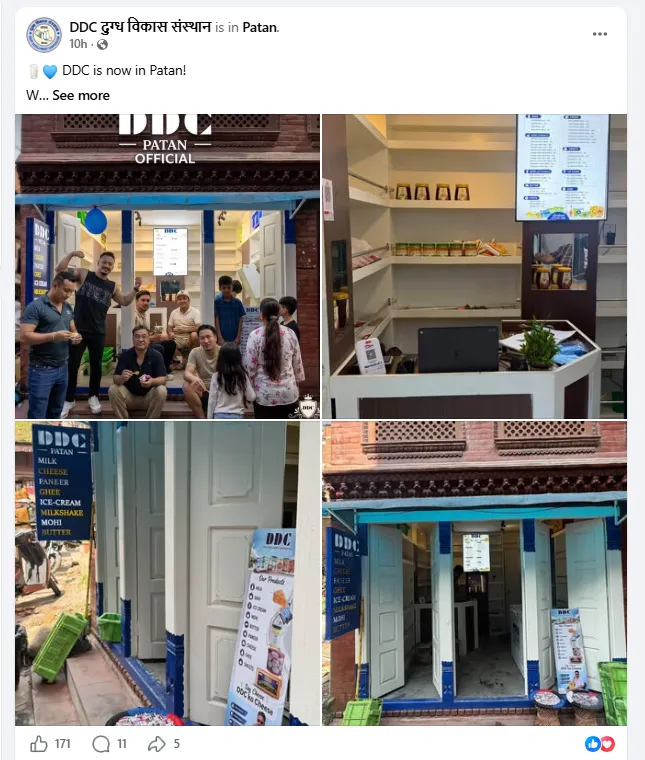
In the months since the viral post, DDC has been opening new branches — I’ve verified this myself through their official Facebook page, including new outlets in Balkot, Tilottama in Rupandehi, and Patan. That’s real expansion, not just talk, and it spans both the Kathmandu Valley and out into the Terai.
This lines up with independent reporting too. Radio Nepal Online reported in late July 2026 that DDC was preparing to bring 30 new outlets into operation across the Kathmandu Valley by mid-August — a genuine, confirmed expansion push happening in the months right after the viral moment.
This doesn’t prove the cheese demand itself stayed elevated at that same 30 percent level. But it does show something better: DDC didn’t just enjoy a viral moment and move on. They followed it with real, visible investment in reaching more customers directly. That’s exactly the kind of follow-through the earlier section of this post argued was missing from most viral moments — and DDC, to their credit, appears to be doing it.
My Suggestions, If I Were Advising DDC
If this had landed on my desk the week it happened, here’s what I’d have pushed for immediately:
- A same-week follow-up post or campaign, riding the exact wave while it was still active — recipe ideas, a limited offer, anything that gave people a reason to buy again within days, not just once
- A simple way to capture the people who showed up — even something as basic as an in-store or social media giveaway requiring an email or phone number, turning curious one-time buyers into a real, ownable audience
- Cross-sell into the DDC products that are already a daily habit — paneer, ghee, dahi, milk — while the attention was hot, instead of spending all of it trying to force yak cheese itself into a shopping habit it was never realistically going to become
- Honest, public acknowledgment of the supply-chain problems, paired with the moment — turning a viral post into a real opportunity to talk about supporting Himalayan farmers directly, which fits naturally with why people were excited in the first place
None of this fixes DDC’s deeper structural challenges. But it’s the difference between a viral moment that fades into a fun story, and one that actually converts into lasting, measurable business value.
Frequently Asked Questions
Did the Prime Minister’s post actually increase yak cheese sales?
Yes — DDC’s own marketing chief confirmed a real, roughly 30 percent increase in demand the day after the post went viral, and outlets reported genuine customer interest and requests for the product by name.
Did stores really run out of yak cheese completely?
Some stores reported reduced stock, according to DDC officials, though no clear confirmation of widespread shortages at specific named stores was found in reliable news coverage. Treat the more specific viral claims about this with some caution.
Why didn’t the demand spike last?
Cheese isn’t part of Nepal’s everyday diet the way staples like rice or dal are, so a single viral moment doesn’t automatically create a lasting buying habit. On top of that, DDC’s yak cheese supply chain has real structural challenges — declining Himalayan herding and shrinking milk supply — that one post can’t resolve.
What’s the marketing lesson here for other Nepal businesses?
A viral or earned-attention moment is genuinely valuable, but only if a business is ready to act on it immediately — capturing interested people, giving them a reason to return, and treating the spike as the start of a relationship, not the end of one.
Is this kind of viral marketing something a business can plan for?
Not directly — this specific moment wasn’t a planned campaign, it was an authentic, unscripted post. What a business can plan for is being ready to respond fast and capture the opportunity if a similar moment happens to them.
Did DDC do anything after the viral moment faded, or was it a one-time win?
They followed through with real action. DDC has been opening new branches in the months since — including outlets in Balkot, Tilottama in Rupandehi, and Patan — alongside a reported push to bring 30 new outlets online across the Kathmandu Valley. That’s genuine follow-through, not just a viral moment left to fade.
Whether it’s a lucky viral moment or a planned campaign, turning attention into lasting demand is the real work. That’s exactly the kind of strategy I help Nepal businesses figure out.
Talk to Bimal About Your Marketing Strategy →
Related reading:
More in Case Study
View all →May 28, 2026
How Xtreme Energy Drink Conquered Nepal: A Full Marketing Breakdown
From tea stalls to T20 World Cup sponsorship — how Xtreme Energy Drink built Nepal's most aggressive FMCG marketing machine using sports, digital, OOH, and community. A full marketing case study.
March 30, 2026
Decoding Khalti: Story Behind the Explosive Growth of Nepal's Fintech Giant
Explore the data-backed growth of Khalti Digital Wallet. From its scrappy 2017 launch and viral referral loops to the historic merger with IME Pay.
March 27, 2026
How Trip Turbo Became Nepal’s #1 Travel App | 500k+ Downloads
From a 2-person marketing team to 500,000+ downloads. Discover the growth story behind Trip Turbo, Nepal's largest travel marketplace and #1 travel app.